

Lease servicing is the work required to manage a lease after a contract has been signed and activated. It includes maintaining contract details, generating invoices, collecting payments, recording transactions, monitoring balances, responding to customers, and preparing reports. For equipment finance and leasing companies, these activities continue throughout each contract’s term. As portfolios grow, spreadsheets, emails, and disconnected systems can become difficult to manage. Technology connects servicing activities, reduces repetitive work, and gives teams a clearer view of contracts and financial performance.
Traditional servicing often requires employees to update several records when one contract detail changes. A new payment date, for example, may require changes to the contract record, billing schedule, accounting worksheet, and reporting file. If an update is missed, teams may use inconsistent information, creating incorrect invoices, delayed collections, or reconciliation issues.
Modern platforms centralize contract and financial data. Authorized employees can review customer details, assets, payment terms, dates, balances, and transaction history in one place. Connected workflows can carry approved updates into relevant servicing activities. Centralized data reduces duplicate entry and helps teams work from consistent information. Clear permissions, approvals, and review procedures remain essential to ensure that changes are accurate and authorized.
Billing is a core lease servicing activity. Contracts can have different payment amounts, frequencies, due dates, fees, taxes, and instructions. Tracking these details manually becomes harder as a portfolio expands.
Automated billing uses stored contract terms to generate invoices according to configured schedules. It can reduce missed billing events, calculation mistakes, and repeated data entry. Staff can review invoices, investigate exceptions, and check which invoices remain outstanding. The system should handle approved contract changes and one-time fees according to defined rules.
Clear invoices and timely statements help customers understand what they owe. Companies must still test billing for amendments, partial periods, tax treatment, payment holidays, and unusual due dates. Automation is dependable only when contract information and system settings are accurate.
Payment collection involves billing records, payment providers, bank activity, and accounting. Depending on the company’s arrangements, servicing technology may support automated clearing house transfers and card payments. Integrated workflows can help staff initiate collections, review provider responses, and track payment status.
Lease servicing directly affects accounting. Billing and payment activity can change receivables, cash balances, fees, income, and other financial records. When servicing and accounting are disconnected, employees may enter the same data more than once and reconcile differences later.
Integrated systems can create accounting entries from approved transactions using configured account mappings and business rules. Depending on the contract and accounting policy, software may support interest calculations, schedules, income recognition, and related reports. Finance teams should confirm that the configuration and output follow company policy and applicable requirements.
Technology supports accounting work but does not replace professional judgment. Organizations need clear review procedures, appropriate access, and checks that financial results are complete and correct. Accounting processes should be tested whenever relevant rules, contract terms, or system settings change.
Contracts can change after activation. Customers may update contact information, request changes to payment dates, or enter approved amendments, renewals, or early payoffs. These events may affect billing, servicing, customer communication, and accounting.
A modern platform provides a structured way to record changes and maintain history. Permissions and approval workflows help ensure that only authorized employees update important details. Audit trails can capture what changed, when it changed, and who performed or approved the action. This evidence helps resolve questions and supports reviews.
Companies should distinguish simple corrections from changes to financial obligations. Updating an email address may require less review than changing a payment amount or contract term. Routing significant changes for approval helps prevent unreviewed updates from affecting invoices or accounting records.
Customers want clear answers about invoices, payment status, balances, and contract details. When employees search across emails and applications, responses can be slow or inconsistent. A consolidated servicing view helps authorized staff find relevant information and respond more confidently.
Customer portals, when available, can let customers review statements, access documents, view permitted account details, or make payments. Automated reminders can communicate upcoming due dates and important account events. These options reduce routine inquiries and give servicing representatives more time for complex requests.
Self-service must be secure and easy to use. Customers should only access their own information, and sensitive changes may require identity verification or staff approval. Notifications should be accurate and understandable. Customers also need a clear way to ask questions or dispute an invoice or payment record.
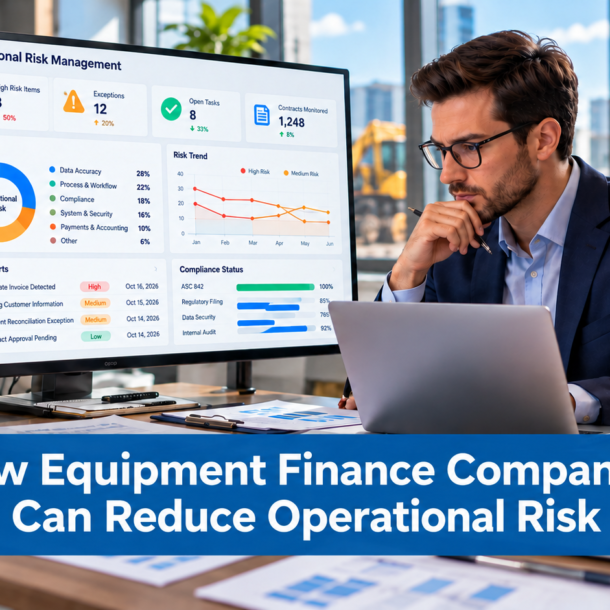
Managers need visibility into invoices, collections, overdue balances, failed payments, upcoming maturities, and servicing workload. Reporting tools and dashboards can summarize these measures and help teams identify problems earlier.
An aging report can show how long receivables have remained unpaid. Billing reports can identify contracts that did not generate expected invoices, while payment reports highlight transactions requiring follow-up. Portfolio summaries can compare activity by customer group, asset class, or contract type when data is captured consistently.
Reports are useful only when their underlying data is reliable. Teams should check filters, date ranges, status definitions, and account mappings. Access controls must protect confidential information. Regular reconciliation between servicing records, payment activity, and the general ledger remains important even when reports are generated automatically.
As portfolios grow, routine tasks create larger workloads. Generating invoices, processing payments, updating aging information, and running income recognition can take time when records are handled individually. Batch processing runs eligible records in groups and can help companies manage higher volumes efficiently.
A reliable process shows job status, completed records, and exceptions. If a record fails, the system should log a useful error and, where designed to do so, continue processing other eligible records. Retry procedures must prevent duplicate invoices, payments, or entries.
Companies should test batch jobs with normal, high-volume, incomplete, and invalid data. They should confirm that completed records are correct, failures are logged, and totals can be reconciled. Batch processing improves capacity but still requires monitoring and exception handling.
Lease servicing may rely on data from external origination systems, banks, payment processors, tax services, customer relationship tools, or enterprise resource planning platforms. Without integration, employees transfer information manually, causing delays and errors.
Application programming interfaces and managed imports support structured data exchange. They can reduce duplicate entry and help keep customer, contract, billing, and accounting records aligned. Before implementation, organizations should define which system owns each field, how often data moves, how errors are reported, and who resolves mismatches.
Integrations need ongoing monitoring because systems, data formats, and provider services can change. Access management, testing, and documented recovery procedures improve reliability. Sensitive information should be protected during transfer and storage, and each connection should share only the data needed for its purpose.
Artificial intelligence can assist selected servicing tasks, especially when employees handle large volumes of documents or unstructured information. Document tools may extract contract details, classify files, or identify information that needs review. Search tools may help staff locate guidance or summarize relevant servicing history.
AI output should not be accepted without appropriate checks. Extracted terms must be compared with signed contracts, particularly when wording is unclear or documents are incomplete. Organizations should retain source documents, establish review rules, and record corrections. Financial calculations should remain controlled, consistent, and reproducible.
Before adopting AI, companies should evaluate privacy, permissions, limitations, and vendor practices. Good use cases address specific operational problems and can be measured, such as reducing review time or data-entry errors. AI is valuable when it supports employees and strengthens a defined workflow, not when it adds complexity without a clear benefit.
Servicing platforms contain customer information, contract documents, payment records, and financial data. Technology can support protection through role-based permissions, authentication, encryption, activity logs, backups, and monitoring. These safeguards should match the organization’s policies and risk profile.
Employees should receive only the access needed for their responsibilities. Access should be reviewed when roles change, and sensitive actions may require additional approval. Audit trails help explain activity and should be protected against unauthorized changes. Records must be retained according to company policy and applicable requirements.
Compliance also depends on people and procedures. Staff need training, documented steps, and clear escalation paths for errors or security incidents. Companies should assess vendors and test recovery plans. Technology helps apply controls consistently, but the organization remains responsible for oversight and accountability.
Choosing a platform starts with understanding current processes and business goals. Companies should map the servicing lifecycle, identify bottlenecks, and decide which activities need automation or better visibility. Important considerations include contract flexibility, billing, payment integration, accounting, reporting, security, usability, and scalability.
Decision makers should examine how the system handles exceptions as well as standard tasks. They should ask how amendments are approved, failed payments investigated, records corrected, and reports reconciled. Demonstrations using realistic contracts provide more useful evidence than feature lists alone. Data migration, training, implementation, support, and ongoing maintenance should also be considered.
A phased rollout can reduce disruption. Teams can begin with a limited group of contracts, test workflows, compare results with existing records, and resolve issues before expanding. Measures such as invoice accuracy, processing time, exception resolution, and reporting effort help evaluate performance.
Technology should deliver measurable results. Useful indicators include time needed to generate invoices, the share of payments applied automatically, unresolved exceptions, manual corrections, and time spent preparing month-end reports. Customer response times and overdue receivables can also reveal changes in servicing performance.
Companies need baseline measurements to understand progress. Faster processing is not a success if it creates inaccurate invoices or unresolved accounting differences. Teams should review results regularly, investigate unexpected changes, and balance efficiency with accuracy, control, and customer experience.
Employee feedback is also valuable. Staff can identify confusing screens, unnecessary steps, and recurring exceptions that metrics may not explain. Combining operational data with practical experience helps organizations improve workflows and training over time.
Modern lease servicing is moving toward connected workflows, timely information, and proactive exception management. Cloud access can support distributed teams, integrations reduce manual transfers, and automation handles repeatable tasks. Dashboards make performance easier to monitor, while carefully governed AI may help employees work with documents and information.
Priorities differ by company. A smaller lessor may first need automated invoicing and payment tracking. A larger portfolio may require stronger integrations, batch processing, detailed permissions, and advanced reporting. Organizations should select technology based on real operational needs rather than adopting tools for their own sake.
Successful modernization depends on accurate data, thoughtful process design, trained employees, and ongoing oversight. Technology can make servicing faster and more transparent, but results depend on implementation and governance. When contract data connects with billing, payments, accounting, and reporting, teams gain a stronger foundation for consistent service and sustainable portfolio growth.
Technology has become central to modern lease servicing because it connects activities that were once managed separately. Automated billing, integrated payments, structured contract changes, accounting workflows, reporting, and batch processing can reduce repetitive work and improve visibility. Secure integrations and carefully applied AI can provide additional support. The goal is not simply to replace manual tasks with software. It is to build a dependable process in which information moves accurately, exceptions receive attention, and financial activity can be traced across the full lease lifecycle.

Reach our dedicated support team
at info@athenafintech.com or +1 650 701 7703.
Questions or assistance?
We’ve got you covered.
Athena Fintech Inc.
HQ: California, USA
Tech Center: India
Athena Fintech Inc.
HQ: California, USA
Tech Center: India