
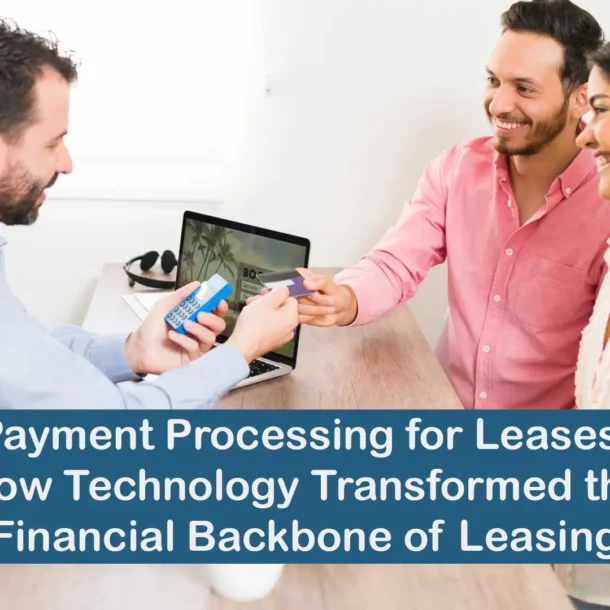

Lessors have historically been slow in adopting new technologies. The rapid development of new technologies is enabling lessors to adopt these digitization tools. Lessors need to rethink their operations to differentiate what they can offer to their customers with digitization. Migrating from spreadsheets to going paperless is not enough. Lessors need to position themselves as leaders by leveraging technology to change all aspects of the lease lifecycle.
In this article, we discuss some emerging technologies and explore their applicability to lessors.
Lessors can take advantage of cloud-based platforms. These platforms help lessors with scale and access. Lessors can easily handle spikes in volume for seasonal businesses. Their users can access the platform in the office or on the go. Traditionally, the cloud was associated with data storage. Now it is the preferred choice to integrate seamlessly across multiple platforms and third parties, providing a seamless experience to users and customers. Real-time synchronization ensures everyone has access to the same data at all times.
There is more to document management than digitizing paper and organizing its storage. Lessors are using optical character recognition (OCR) with artificial intelligence (AI) to
With the adoption of eSignatures, documents generated from the system can be automatically sent for signature.
Web 3.0 is maturing with blockchain technologies driving decentralization and tokenization. It is better known as cryptocurrency and smart contracts. How does this help lessors?
Smart contracts are in the early adoption phase by lessors. The advantages of storing self-executing agreements are that they cannot be modified without detection. For widespread adoption, funders buying leases need to buy into this concept.
Cryptocurrency is established but needs central government support. Lessors can accept payments in crypto but may be subject to exchange rate risk. On the other hand, the ability to borrow in the same crypto is not common.
As crypto and smart contracts become mainstream, lessors will increase usage.
The convergence of physical and digital is being termed Phygital. These are coming together with Augmented Reality (AR) and Virtual Reality (VR).
Lessors are exploring phygital to resolve complex issues around asset inspections at remote locations. Physical inspections can be costly and time-consuming. Asset condition is another use case. When paired with sensors, cloud computing, and artificial intelligence, AR and VR can continuously monitor equipment to maintain assets operating at optimal efficiency.
When paired with sensors, cloud computing, and artificial intelligence, AR and VR can continuously monitor equipment to maintain assets operating at optimal efficiency. Combining these enhances the lessors’ customer experience. AI, machine learning, and datafication, converting data into understanding
Making all of the data actionable is known as datafication.
Combining these enhances the lessors’ customer experience. AI, machine learning, and datafication: Converting Data into Understanding
Lessors search for information to increase cash flow, improve credit approvals, and find opportunities for remarketing. They can forecast trends and spot opportunities by applying AI and ML to data produced during the lease lifecycle.
While deep analysis finds opportunities, visualization assists lessors in monitoring their KPIs.
Quantum computing enables processing millions of variables. This is still early in its development and adoption cycle.
Once quantum computing becomes mainstream, lessors will use it in conjunction with AI and ML to optimize complex portfolios.
Cyber threats are increasing as organizations digitize.
Digital Immune Systems (DISs) use cloud and AI to automate opportunities and data to identify, learn from, and eliminate threats before they disrupt operations. DISs adapt instead of simply reacting; the response happens in real-time because the system continuously monitors for suspicious activity and updates defenses based on the most recent events.
AI Transparency, Trust, and Security Management (AI TRiSM) is also of equal importance. As lessors who use AI in their own way progress, these systems must be deployed in a responsible, secure, and transparent manner. AI TRiSM frameworks help with striking a balance between providing governance across all challenges and providing an environment for
Edge computing, which processes data close to the point of creation, is a way to minimize latency with IoT-connected tooling. Similarly, low-code and no-code platforms are a development that enables lessors to customize their own digital tools without a resource-heavy programming effort. They allow leasing organizations to respond quickly and creatively to changes without a large IT price tag and build a solution that is specific to a customer on demand.
Digital transformation in lease management is not about chasing every shiny new technology. Select tools that align with your business model, strengthen your decision-making, and prepare your organization for continuous change.
From cloud infrastructure and AI-driven analytics to blockchain contracts, immersive asset visualization, and emerging cybersecurity models, the landscape of vehicle and equipment leasing is evolving rapidly. Lessors who understand these technologies, implement them with strategy and discipline, gain more than operational efficiency. They gain the ability to anticipate change, protect their portfolios, and deliver exceptional value to clients in an industry that rewards agility and trust.
The future of leasing is connected, intelligent, and resilient. Those who embrace it thoughtfully will lead the next era of asset finance.

Reach our dedicated support team
at info@athenafintech.com or +1 650 701 7703.
Questions or assistance?
We’ve got you covered.
Athena Fintech Inc.
HQ: California, USA
Tech Center: India
Athena Fintech Inc.
HQ: California, USA
Tech Center: India